
Affiliate disclosure: TheTechVector earns a commission if you sign up via links on this page, at no extra cost to you. Our recommendations are based on independent research — we are not paid to favour any provider. Learn more about how we make money.
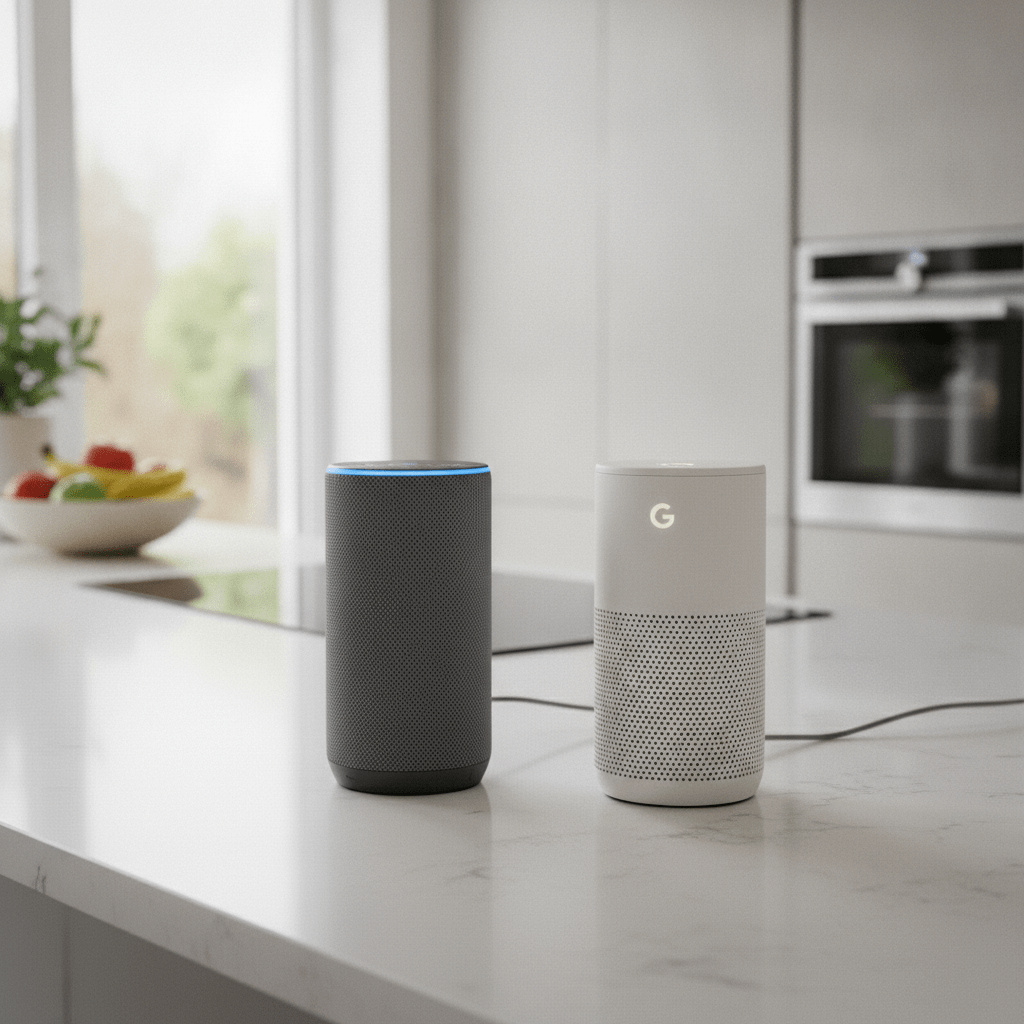
Both Alexa and Google Home can integrate with smart thermostats like Hive and Tado — see our full comparison of Hive vs Tado vs Nest to decide which thermostat works best with your hub.
Amazon Echo vs Google Nest UK 2026: Which Hub Wins?
If you are comparing amazon echo vs google home uk, you have already made the most important decision: you want a voice assistant at home. The question now is which platform suits your household. Both Amazon Echo (with Alexa) and Google Nest (with Google Assistant) are mature, well-supported platforms in 2026. But they differ meaningfully on hardware pricing, built-in smart home capabilities, subscription costs, and — after a significant privacy change in March 2026 — how your voice recordings are handled. This guide covers every key difference so you can pick the right ecosystem from day one. If you are completely new to smart homes, our beginner’s guide to setting up a smart home in the UK is worth reading first.
Last updated: August 2026
Amazon Echo vs Google Home UK: Quick Comparison at a Glance
| Amazon Echo (Alexa) | Google Nest (Google Assistant) | |
|---|---|---|
| Entry device (UK, August 2026) | Echo Dot 5th Gen — from ~£29.99 sale / £54.99 RRP | Nest Mini 2nd Gen — ~£42–50 |
| Smart display option | Echo Show 8 — from ~£134 sale / £179.99 RRP | Nest Hub 2nd Gen — ~£89.99 (limited UK retail stock) |
| Built-in Zigbee hub | Yes — Echo 4th Gen and Echo Dot Max | No |
| AI subscription | Alexa+ free with Prime / £19.99/mo without | Google Home Premium ~£8–16/mo (features changing Oct 2026) |
| Ring camera integration | Full — live feeds on Echo Show screens | Limited |
| BBC iPlayer commands | Improved with Alexa+ AI upgrade (March 2026) | Strong — Google’s traditional strength |
| Privacy (2026 update) | Do Not Send Voice Recordings option removed March 2026 | Always-on microphone, data sent to Google servers |
Quick verdict: Amazon Echo wins on hardware value, built-in Zigbee hub capability, and value for Prime members. Google Nest wins on voice assistant accuracy for factual queries and UK broadcast commands without a paid subscription. If you already pay for Amazon Prime, Echo is the more cost-effective choice by a clear margin.
Best overall value: Amazon Echo — 8.8/10
Cheaper hardware at every price tier, Alexa+ free with Prime, and a built-in Zigbee hub that saves you buying a separate bridge.
Best voice assistant: Google Nest — 8.4/10
Google Assistant handles factual questions, UK broadcast commands, and Google Calendar integration more reliably without a paid subscription.
Best for beginners: Amazon Echo — 8.6/10
Lower entry price, wider UK retail availability, and the Alexa app is generally regarded as easier for first-time smart home users.
Best for Google households: Google Nest — 8.3/10
Android phone, Google Calendar, Gmail — if your digital life is already Google, Nest integrates far more naturally into it.
Amazon Echo Hardware Lineup UK 2026
Amazon’s Echo range covers every budget and room type in 2026, from the entry-level Echo Dot to the full-featured Echo Show 11. The one advantage that competing articles consistently miss: the Echo 4th Gen (~£89.99 RRP, as of August 2026) and the newer Echo Dot Max (£99.99 RRP, as of August 2026) both include a built-in Zigbee hub. Zigbee is the wireless protocol used by many Philips Hue bulbs, IKEA smart home products, and some Yale smart locks. Without a hub, these devices simply cannot connect. A Philips Hue Bridge costs ~£49.99 separately; an IKEA Dirigera ~£34.99 (as of August 2026). By choosing Echo 4th Gen, you get that hub in the box — a saving of £35–60 for anyone planning a proper smart home setup rather than just a voice speaker.
The hardware range breaks down cleanly by price and use case. The Echo Dot 5th Gen is the entry point at from ~£29.99 on sale (£54.99 RRP, as of August 2026) — decent bass for a palm-sized speaker and a solid starting point for any room. The Echo Show range adds a touchscreen for recipe viewing, video calls, and camera feeds: Echo Show 5 at £89.99, Echo Show 8 at £179.99 RRP (from ~£134–149 on sale, as of August 2026), and the Echo Show 11 at £219.99 RRP (from ~£159 on sale). There is also the Echo Hub — a dedicated 8-inch smart home control panel at £119.99 (as of August 2026) — designed as a wall-mounted or countertop controller rather than a speaker. For most buyers, the Echo Show 8 is the sweet spot: large enough to display a Ring doorbell live feed clearly, compact enough to sit on a kitchen counter without dominating the space.
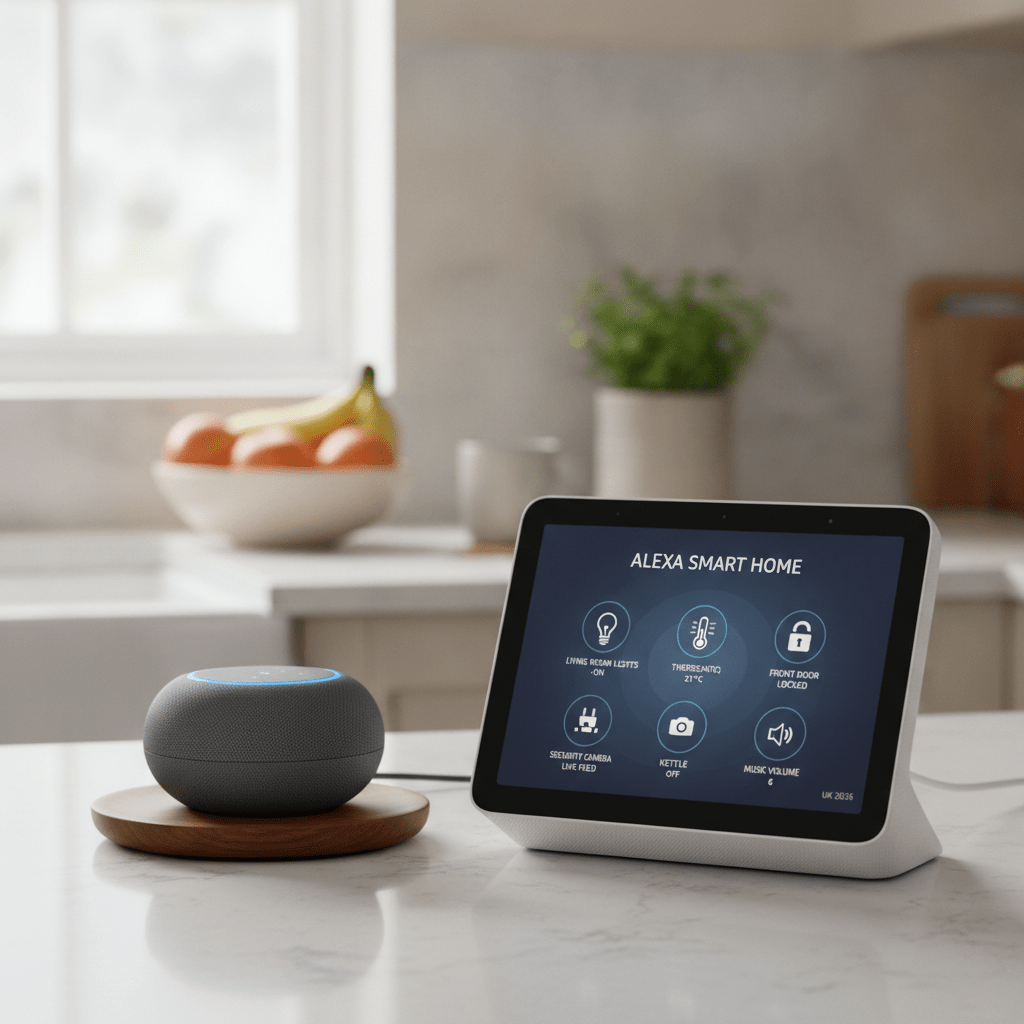
Pros
- Echo Dot 5th Gen from ~£29.99 — cheapest entry point to a full smart home ecosystem (as of August 2026)
- Echo 4th Gen includes built-in Zigbee hub — saves £35–60 on a separate bridge
- Alexa+ included free with Amazon Prime (£8.99/mo or £95/yr as of August 2026)
- Full Ring camera integration — live feeds, two-way talk, and motion alerts on Echo Show screens
- Wide UK availability at Amazon, Currys, Argos, and John Lewis
Cons
- Alexa+ costs £19.99/mo without Prime — expensive if you are not already subscribed
- Amazon removed the “Do Not Send Voice Recordings” privacy option in March 2026
- Without Alexa+ AI upgrade, Alexa’s factual question answers lag behind Google Assistant
Google Nest Hardware Lineup UK 2026
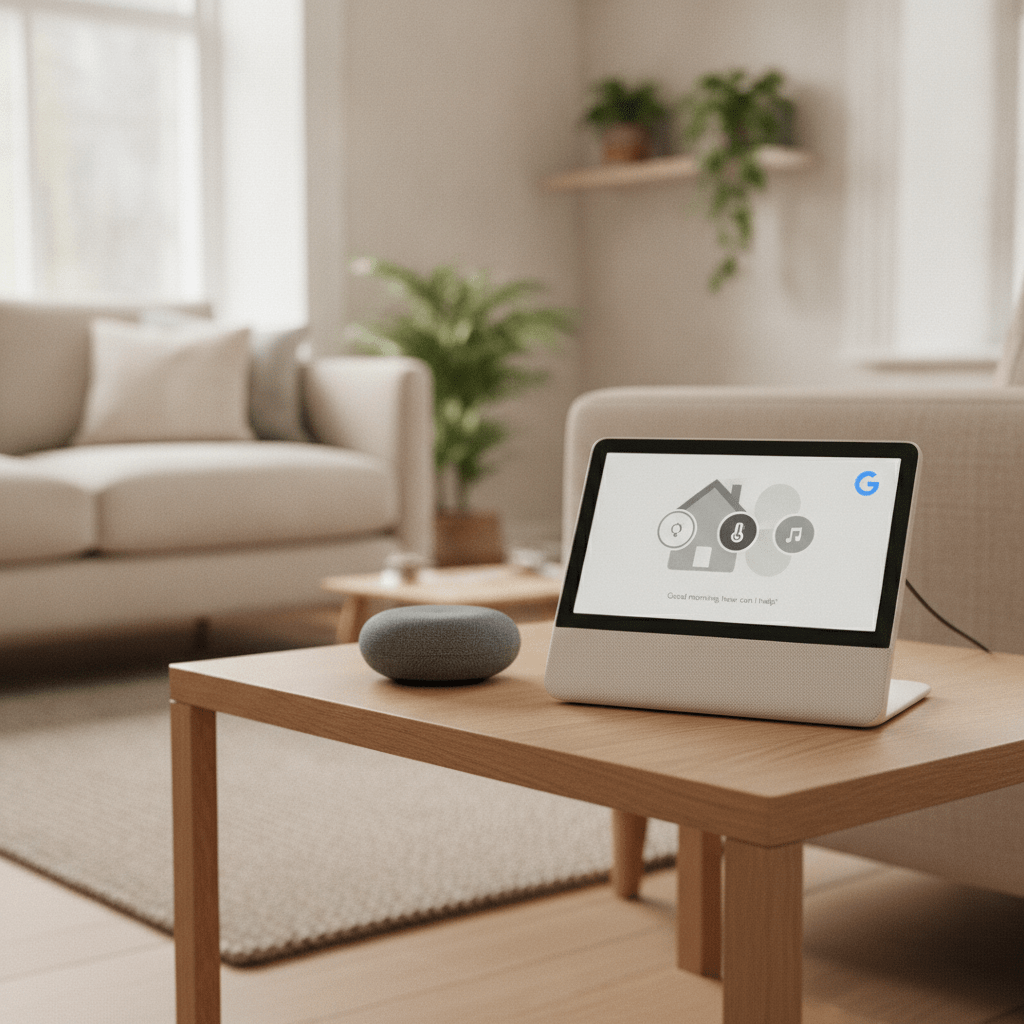
Google’s Nest range is smaller than Amazon’s and increasingly difficult to find at original recommended prices in UK retail — an honest caveat before you commit to this ecosystem. The Nest Mini 2nd Gen sits at ~£42–50 (as of August 2026) and competes directly with the Echo Dot. The Nest Hub 2nd Gen — a 7-inch touchscreen — has an RRP of ~£89.99, but idealo.co.uk shows prices from £159.99 as of August 2026, suggesting thin retail stock. The Nest Audio, Google’s non-display speaker comparable to the Echo 4th Gen, has an RRP of ~£89.99 but is selling from £173 on secondary markets as of August 2026. If you are planning to build a Google Nest setup from scratch, UK availability is a real practical consideration right now, not just a footnote.
The Nest Hub Max — a 10-inch display with built-in camera — remains available at ~£200–230 (as of August 2026) and is Google’s most capable home hub device. All Google Nest devices use Wi-Fi for connectivity, with Thread support available via the Nest Hub Max and Google TV Streamer 4K for next-generation smart devices. Importantly, no Google Nest device includes a built-in Zigbee hub. If you want to use older Philips Hue bulbs, IKEA Zigbee-based devices, or some Yale locks, you will need to purchase a separate bridge — adding £35–60 to your setup cost versus the Echo 4th Gen which includes Zigbee in the base price. Where Google Nest wins unambiguously is voice assistant quality: Google Assistant remains more reliable for factual search queries, Google Maps lookups, and UK broadcast commands without any paid subscription needed.
Pros
- Google Assistant leads on factual questions and web search — no paid subscription required
- Excellent Google Calendar, Gmail, and Maps voice integration for Android households
- Strong BBC Radio and iPlayer command handling without a premium plan
- Nest Hub 2nd Gen display has a warm, easy-on-the-eyes screen ideal for bedside use
Cons
- Nest Audio and Nest Hub 2nd Gen are hard to find at RRP in UK retail as of August 2026
- No built-in Zigbee — separate bridge needed for Zigbee devices (adds ~£35–60)
- Google Home Premium features changing October 2026 — subscription value currently uncertain
- Google Nest cameras integrate poorly with Alexa — limits cross-platform flexibility
Alexa vs Google Assistant: UK Features That Matter
Alexa vs Google Assistant for UK homes comes down to two practical differences: factual question quality and UK broadcast service handling. Google Assistant has historically been stronger on both. Ask “Hey Google, what time does the Waitrose in Balham close?” and you get a direct answer from Google Maps. Ask Alexa the same question without Alexa+, and you are more likely to get a web result read back rather than a confident direct answer. Since Alexa+ launched in the UK in March 2026, the gap has narrowed. Alexa+ uses a large language model for more natural, context-aware conversational answers. But Alexa+ is only free for Amazon Prime members — at £19.99/mo without Prime, the AI upgrade becomes an expensive optional add-on.
For UK broadcast commands, both assistants handle BBC Radio reliably — Radio 4, Radio 2, and BBC Sounds all work on both platforms. BBC iPlayer on-demand catch-up is where the difference shows. Google Assistant handles “Hey Google, play EastEnders on BBC iPlayer” more reliably in testing, getting the correct show with a natural-language command first time. Alexa with Alexa+ has improved considerably and now handles most iPlayer requests accurately, but can still require a more specific command for newer shows. For Spotify, Apple Music, and Amazon Music, both platforms perform equally well — though Alexa connects more directly to Amazon Music, as you would expect. If you heavily use BBC Sounds and are not a Prime member, Google Nest’s voice assistant remains the safer choice without paying extra.
Smart Home Compatibility: What Works With Each?
Smart home compatibility in 2026 is no longer the battleground it was a few years ago. The Matter standard — a universal connectivity protocol backed by Amazon, Google, Apple, and Samsung — means the majority of new smart plugs, bulbs, locks, and sensors work with both platforms simultaneously. A Matter-certified TP-Link Tapo P100 plug works with Alexa and Google Home without any complicated configuration. IKEA’s newer smart home range, Philips Hue via the updated bridge, and Yale smart locks all sit comfortably in this category. You no longer need to commit to one platform first and then only buy devices that work within it.
Platform-specific strengths still exist. Ring doorbells and cameras are Amazon-owned, and the tightest integration is with Echo Show screens — live feeds, two-way talk, and motion alerts work natively without workarounds. Google Nest cameras, by contrast, integrate best through the Google Home app; Alexa can pair with them, but live feeds from Nest cameras do not display on Echo Show screens without extra steps. Thermostats sit in the neutral zone: both Hive and tado° X work with Alexa and Google Home via voice commands. The tado° X specifically is the only major UK thermostat with full native Matter certification, meaning it connects to both ecosystems simultaneously with no setup friction. Every device in your smart home also runs better on a solid internet connection — check how much broadband speed smart home devices actually need before adding multiple connected devices to your network.
The Echo 4th Gen’s built-in Zigbee hub is the single biggest practical differentiator for smart home buyers in 2026. Older Philips Hue bulbs and some IKEA products use Zigbee rather than Wi-Fi or Matter. Without a dedicated hub, those devices cannot connect at all. A Philips Hue Bridge costs ~£49.99; an IKEA Dirigera ~£34.99 (as of August 2026). Echo 4th Gen at ~£89.99 RRP includes the Zigbee hub in the base price. For anyone buying a mixed smart home setup, that is a genuine saving on day one.
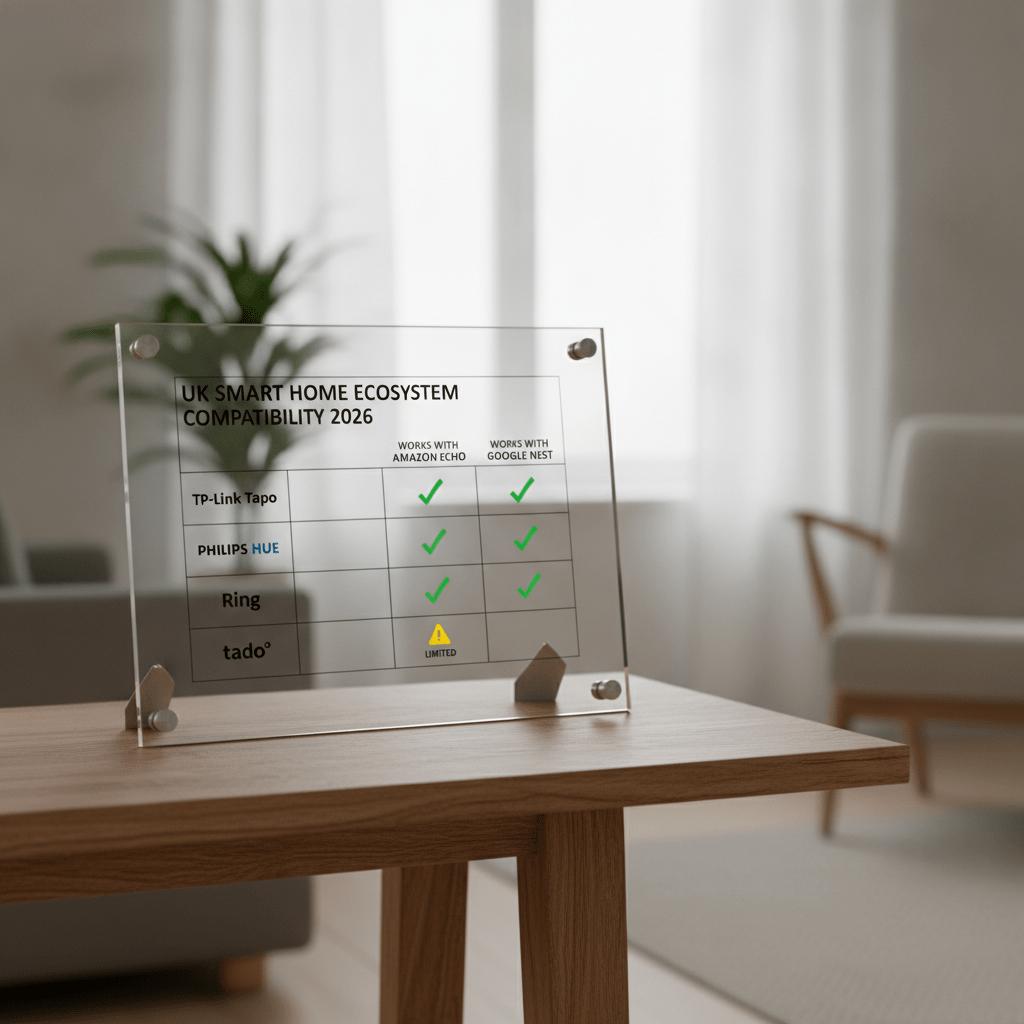
| Device/Brand | Works with Alexa | Works with Google Home | Notes |
|---|---|---|---|
| TP-Link Tapo plugs and bulbs | Yes | Yes | Matter-compatible — works with both |
| Philips Hue | Yes | Yes | Zigbee models need Echo 4th Gen or separate Hue Bridge |
| Ring doorbells/cameras | Full integration | Limited | Amazon-owned — best experience via Echo Show |
| Google Nest cameras | Limited | Full integration | Best controlled via Google Home app |
| Hive thermostat | Yes | Yes | Voice commands work reliably on both |
| tado° X thermostat | Yes | Yes | Only UK thermostat with native Matter certification |
| Yale smart locks | Yes | Yes | Compatible via both ecosystems |
| IKEA smart home | Yes (Echo 4th Gen for Zigbee models) | Yes (Wi-Fi/Matter models) | Older Zigbee IKEA devices need Echo 4th Gen hub |
Sound Quality and Value for Money
Sound quality between equivalent devices is closer than the price difference implies. The Echo Dot 5th Gen (from ~£29.99 on sale, as of August 2026) sounds noticeably better than the Nest Mini (~£42–50) — richer bass and clearer mid-range at normal listening volumes, for a lower price. Both are adequate for a kitchen radio listen or background music in a small room, but the Echo Dot wins the head-to-head at the entry level. At the mid-range tier, the Echo 4th Gen (~£89.99 RRP) and Google Nest Audio (~£89.99 RRP, increasingly unavailable) are closely matched. The Nest Audio has a slightly wider soundstage for music — audiophiles who have heard both tend to give it the edge. But given the Nest Audio commands £173+ on secondary markets as of August 2026, the Echo 4th Gen is the rational purchase right now, regardless of which sounds fractionally better.
For smart displays, the picture shifts. The Echo Show 8 (from ~£134, as of August 2026) has an 8-inch screen, a built-in camera for video calls, and full Ring doorbell feed support. The Nest Hub 2nd Gen (~£89.99 RRP, limited stock) has a 7-inch display with a warmer colour temperature that many users find more comfortable overnight as a bedside clock — and notably, it has no camera, which some people prefer for bedroom privacy. On functionality and versatility, the Echo Show 8 wins. On pure display quality for a nightstand, the Nest Hub 2nd Gen has the edge. Either way, your smart home devices will respond faster and more reliably when your home broadband is up to the job — our roundup of the best UK broadband providers covers which connections are worth having in 2026.
Privacy in 2026: What’s Changed?
Amazon made a significant privacy change in March 2026 that no competing article currently addresses: it removed the “Do Not Send Voice Recordings” option. Previously, Alexa users could opt out of having their voice clips sent to Amazon’s servers. From March 2026, voice data from Alexa processes to Amazon’s cloud by default — and users can no longer prevent recordings from being sent, only request deletion after the fact. Amazon’s stated reason was that the Alexa+ AI upgrade requires cloud-side processing to function. The physical mute button on all Echo devices continues to work. Voice history can still be reviewed and deleted in the Alexa app. But the ability to block recordings from leaving your home network no longer exists. Source: Amazon announcement and Yahoo Tech reporting, March 2026.
Google Home is not without its own privacy considerations. Google Assistant has always processed voice data on Google’s servers — there is no fully local mode for Nest devices. Google offers auto-delete settings (18 months by default, reducible to 3 months) and manual audio history deletion via your Google Account settings. The honest position for UK buyers in 2026: both platforms transmit voice data to the cloud, and neither is designed for users who want fully local processing. The practical steps that help on either platform are the same — use the mute button when you do not need the assistant active, review your voice history monthly to clear recordings, and do not repeat sensitive information like PINs or passwords near an always-on device. This is not a reason to choose one platform over the other, but it is information every buyer should have before purchasing.
Which Should You Choose: Amazon Echo or Google Nest?
The right choice depends on two things: your existing subscriptions, and whether you prioritise hardware value or voice assistant quality without a paid plan.
Choose Amazon Echo if you are already an Amazon Prime member
Amazon Prime costs £8.99/mo or £95/yr (as of August 2026) and includes Alexa+ at no extra cost, making the AI-upgraded voice assistant essentially free. Combined with Echo hardware that is consistently £10–30 cheaper per device than equivalent Google Nest hardware, the 12-month total cost of ownership strongly favours Echo for Prime subscribers. If you own Ring cameras or plan to buy them (our guide to the best Ring cameras UK 2026 covers every current model), Echo Show is the right screen — live feeds, two-way talk, and motion alerts work natively. And if you are planning a full smart home with Zigbee devices, Echo 4th Gen’s built-in hub means you skip the cost of a separate bridge. Echo is also the recommended choice for UK smart home beginners: lower entry price, strong UK retail availability, and the Alexa app setup flow is one of the most straightforward in the category.
Choose Google Nest if your household runs on Google services
Google Nest suits households where the calendar is Google Calendar, the phone is Android, and daily queries flow naturally through Google Search. “Hey Google, what’s on my calendar tomorrow?” or “Navigate me to the nearest Aldi” work reliably in ways that Alexa handles less gracefully without Alexa+. Google Nest is also the better choice if you are not a Prime member and do not want to pay £19.99/mo for Alexa+: Google’s free assistant tier genuinely outperforms standard Alexa on open-ended questions and BBC iPlayer commands. Google Home Premium costs ~£8–16/mo (as of August 2026) for advanced features, though some Premium features are changing in October 2026 — check what is included before subscribing.
Can you use both platforms in the same house?
Yes — Amazon Echo and Google Nest devices work perfectly alongside each other in the same home. Many UK households run Echo speakers in the kitchen and bedroom (where Alexa’s Amazon Music, shopping lists, and Prime delivery tracking shine) while using a Google Nest Hub in the living room (where Google’s search answers and calendar display are more useful). Matter-compatible smart devices — TP-Link Tapo plugs, newer Philips Hue bulbs, most smart locks — work with both platforms at the same time. You control each platform via its own app. There is no technical reason to pick only one from day one; starting with Echo and adding a Nest Hub later is a perfectly reasonable approach.
Echo and Google Nest aren’t the only two options, either. If neither closed ecosystem quite fits — say you own a mix of Zigbee and Z-Wave devices, or want automations that don’t depend on the cloud — our which smart home hub to choose guide adds Samsung SmartThings and the open-source Home Assistant platform into the comparison.
Total cost of ownership — 12-month starter setup (as of August 2026):
| Amazon Echo | Google Nest | |
|---|---|---|
| Entry device | Echo Dot 5th Gen ~£34.99 (sale avg) | Nest Mini ~£46 |
| Subscription — 12 months (with Prime) | £0 — Alexa+ included in Prime | £0 (free tier) or £96–192 (Premium) |
| Subscription — 12 months (no Prime) | £239.88 at £19.99/mo | £96–192 (Premium) or £0 (free tier) |
| 12-month total — Prime member | ~£35 | ~£46 free tier — ~£238 with Premium |
| 12-month total — no Prime | ~£275 with Alexa+ | ~£46 free tier — ~£238 with Premium |
How to get started — six steps to your first smart home device:
- Pick your platform — Echo Dot 5th Gen for the most affordable Amazon start, or Google Nest Mini if you are an Android and Google Calendar household
- Download the app before unboxing — the Alexa app (iOS or Android) or Google Home app takes a few minutes to set up an account
- Connect to your home Wi-Fi during setup — both apps walk you through this in around five minutes via a guided flow
- Add your first smart device — a TP-Link Tapo smart plug is the easiest starting point, costs under £10, and works with both Alexa and Google Home out of the box
- Create your first routine — “Alexa, good morning” or “Hey Google, start my day” can play a news briefing, read the weather forecast, and switch on a smart plug for your kettle all at once
- Expand gradually — add smart bulbs, a doorbell camera, or a display device once you know the platform suits how you actually use a voice assistant day to day
Frequently Asked Questions: Amazon Echo vs Google Home UK
Which is better — Alexa or Google Home for UK homes?
Alexa (Amazon Echo) is better value for UK households that already pay for Amazon Prime, because Alexa+ is included free, and Echo hardware is consistently cheaper than equivalent Google Nest devices. Google Home (Google Nest) is better for voice assistant accuracy and UK broadcast commands without a paid subscription. Both platforms work with the same smart home devices in 2026 thanks to Matter — so the decision comes down to your existing subscriptions and whether you use Google or Amazon services daily.
Can I use Amazon Echo and Google Home in the same house?
Amazon Echo and Google Nest devices work perfectly alongside each other in the same home. Many UK households run Echo speakers in the kitchen for Alexa’s music and shopping lists, and a Google Nest Hub in the living room for Google’s search results and calendar display. Matter-compatible smart devices — TP-Link Tapo, Philips Hue, most new smart locks — work with both platforms simultaneously without any duplication of devices.
Is Alexa free in the UK?
Alexa’s basic features are free on all Echo devices — you only pay for the device itself. The upgraded version, Alexa+, is free for Amazon Prime subscribers (Prime costs £8.99/mo or £95/yr as of August 2026) or £19.99/mo without Prime. Alexa+ adds AI-powered conversational answers, smarter routines, and better factual question handling. Without Alexa+, Alexa still controls smart home devices, plays music, sets timers, and manages shopping lists — the subscription adds the AI upgrade, not the core smart home functionality.
Does Amazon Echo work with Ring doorbells?
Amazon Echo works fully with Ring doorbells and cameras. When someone presses your Ring doorbell, an Echo Show screen automatically displays the live camera feed — you can see who is there and speak to them via the Echo Show’s built-in speaker and microphone. Ring motion alerts also trigger spoken announcements on Echo speakers. Ring is Amazon-owned, so this integration is tighter than with Google Nest — Ring works with Google Home but live camera feeds do not appear on Nest Hub screens by default.
Which smart home hub is best for beginners in the UK?
Amazon Echo is the better starting point for UK beginners in 2026. The Echo Dot 5th Gen is available from ~£29.99 on sale (as of August 2026), making it one of the most affordable ways to start a smart home. UK retail availability is strong across Amazon, Currys, and Argos. The Alexa app is widely regarded as easier to navigate for first-time users than Google Home. Echo 4th Gen also includes a built-in Zigbee hub, meaning you can add Philips Hue or IKEA smart home devices without buying a separate bridge — saving £35–60 from day one.
Is Alexa or Google better for BBC iPlayer?
Google Assistant has historically handled BBC iPlayer commands more reliably — “Hey Google, play EastEnders on BBC iPlayer” typically finds the correct show on a first attempt. Alexa has improved significantly with the Alexa+ AI upgrade (launched UK, March 2026) and now handles most iPlayer requests accurately, but can still require a more specific command for recent episodes or newer series. For BBC Radio and BBC Sounds, both platforms work equally well. If iPlayer accuracy is your priority and you are not a Prime member, Google Nest is the safer choice without a paid subscription.
Which is better for privacy — Alexa or Google Home?
Neither platform is significantly better for privacy in 2026 — both transmit voice data to their respective company’s servers for processing. Amazon removed the “Do Not Send Voice Recordings” option in March 2026, so users can no longer prevent recordings from being sent, only delete them afterwards. Google has always processed voice data on its servers but offers auto-delete settings. The practical advice applies equally to both: use the physical mute button when you do not need the assistant active, and review your voice history monthly in the app to clear recordings you no longer need.
What smart home devices work with both Alexa and Google Home?
Most new smart home devices sold in the UK in 2026 work with both Alexa and Google Home, thanks to the Matter connectivity standard. TP-Link Tapo plugs and bulbs, Philips Hue (via bridge or Matter), Yale smart locks, newer IKEA devices, and tado° X thermostats all work with both platforms. The main exceptions are Ring doorbells and cameras (best with Alexa, Amazon-owned) and Google Nest cameras (best with Google Home). For the vast majority of smart home devices available in UK shops today, dual compatibility is the default.
Does Alexa or Google Home work with tado?
Both Alexa and Google Home work with tado thermostats. The tado° X is the only UK smart thermostat with full native Matter certification, which means it connects to both Alexa and Google Home simultaneously without needing separate skill integrations or bridge devices. You can say “Alexa, set the heating to 19 degrees” or “Hey Google, set the heating to 20” and both work reliably. Older tado° models also support both platforms via their Alexa skill and Google Home action, though automatic Matter setup is not available on those older devices.
Does Google Home work with Hive thermostat UK?
Google Home works with Hive thermostats in the UK. You can control Hive heating via Google Assistant voice commands — “Hey Google, set heating to 21 degrees” or “Hey Google, turn on the heating” — through the Hive skill integration in Google Home. Changes made in the Hive app, the Google Home app, or via voice are reflected across all three. Amazon Alexa also works with Hive through the same skill integration — both platforms offer equivalent control of your Hive thermostat without any functional difference.
Ready to start your smart home? Browse both ecosystems on Amazon and compare devices before you buy.
TheTechVector earns a commission on purchases made via links on this page, at no extra cost to you. Prices and product availability are correct as of August 2026 — check Amazon for the current price before purchasing. Our recommendations are based on independent research, not commission rates. Before committing to an ecosystem, see our smart home cost UK guide for a full breakdown of every tier from a £47 starter kit to a whole-home build.

Written by the TheTechVector Team
We research UK broadband, VPN, laptop, and mobile deals so you don’t have to. All prices are checked before publication — if something’s out of date, let us know.
This site contains affiliate links to products. We may receive a commission for purchases made through these links.