Affiliate disclosure: TheTechVector earns a commission if you sign up via links on this page, at no extra cost to you. Our recommendations are based on independent research — we are not paid to favour any provider. Learn more about how we make money.
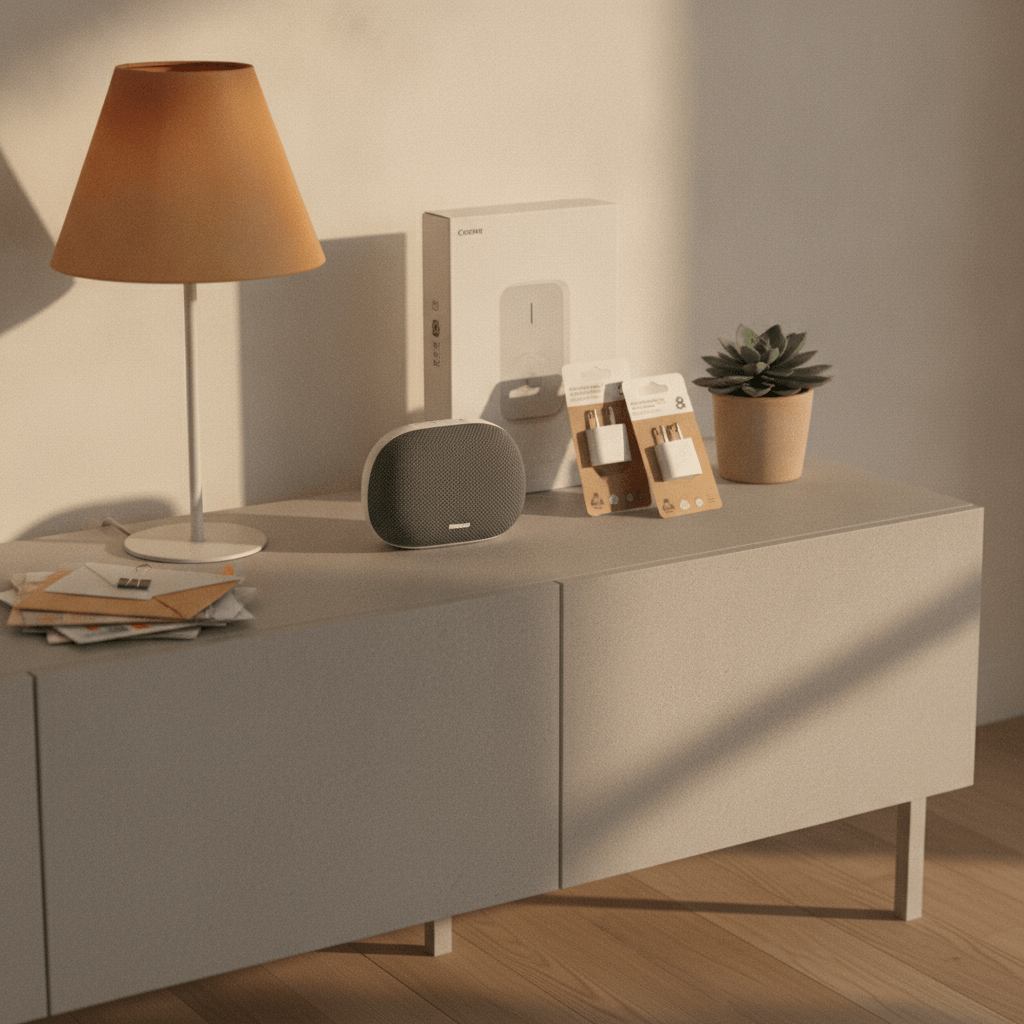
The true smart home cost in the UK is far more manageable than most articles suggest. A genuinely useful starter setup — a voice assistant, four smart plugs, and a video doorbell — runs to around £130–160 one-off. This guide breaks down every cost tier from a first device to a whole-home system, and includes the subscription fees that most articles forget to mention until after you’ve already bought everything.
Renting rather than owning changes which of these are worth buying — our no-drill smart home for renters UK guide breaks down exactly which starter-tier devices are safe for a rented flat.
Last updated: August 2026
If you’re interested in how heating automation could fit into your smart home budget, our guide on comparing smart thermostats like Hive, Tado, and Nest covers the costs and savings in detail.
Quick Comparison: Smart Home Cost by Tier
| Tier | Budget Range | Example Setup | Day-One Cost | Monthly Add-Ons |
|---|---|---|---|---|
| Starter | £50–200 | Echo Dot + 4 Tapo plugs + Ring doorbell | ~£127–160 | £0–£4.99/mo (Ring optional) |
| Mid-Range | £300–750 | Echo Show 8 + Ring Plus + Thermostat + Smart lighting | ~£400–680 | ~£8–35/mo (varies by subscriptions) |
| Full | £1,500–5,000 | Multi-room audio, full alarm, TRVs per radiator, Hue throughout | £1,500–4,000 DIY | ~£30–40/mo (all subscriptions) |
Quick Verdict: Best Value at Each Budget
BEST BUDGET START
Echo Dot 5th Gen + Tapo P100 4-pack
~£47–73 one-off. Zero monthly fees with Prime. The cheapest smart home that actually works.
BEST SINGLE UPGRADE
Ring Battery Video Doorbell 2nd Gen
£79.99 one-off (Amazon UK, Aug 2026). Adds real security value. No wiring needed. See our full Ring doorbell comparison to see how this stacks up against newer models.
BEST ENERGY SAVER
Smart Thermostat (Hive or Tado)
~£180–250 hardware. Saves £75–300/yr on heating bills (Energy Saving Trust, 2026).
How Much Does a Smart Home Cost in the UK?
A UK smart home costs anywhere from £47 for two devices to £5,000+ for a fully self-installed whole-home system. The realistic first-year spend to cover all major smart categories — voice assistant, video doorbell, smart thermostat, and smart lighting throughout — is £600–£1,200 depending on the thermostat and lighting choices you make.
The confusion around smart home costs comes from two very different product categories. Professional AV integrators quote £10,000–£250,000 for bespoke wiring, centralised hubs, and white-glove installation. That is not what most UK buyers need. The consumer-grade smart home — Echo Dot, Ring doorbell, Tapo plugs, Hive thermostat — is entirely DIY, ships in standard retail packaging, and takes under an hour per device to set up.
This guide covers only the consumer-grade path. If you’re also deciding which hub to build around, our Amazon Echo vs Google Nest UK comparison covers that decision in detail before you commit to an ecosystem.
Tier 1 — Starter Smart Home: Under £200 to Begin
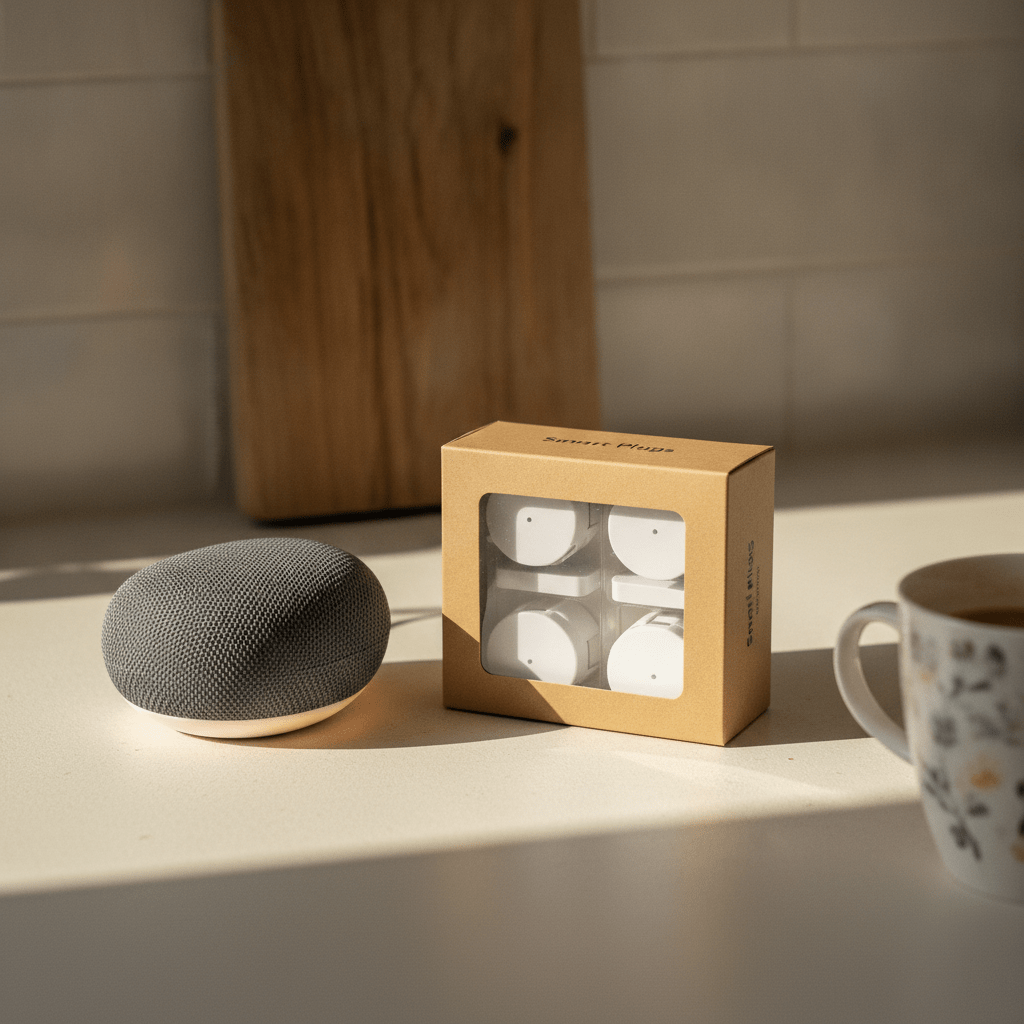
The absolute cheapest working smart home costs £47–73 and takes under 20 minutes to set up. That is one Amazon Echo Dot 5th Gen at ~£34.99 on sale (£54.99 RRP, Amazon UK, August 2026) and a 4-pack of TP-Link Tapo P100 smart plugs at ~£12–18 (Amazon UK, August 2026). Plug the Echo in, connect to your Wi-Fi, and the Tapo plugs pair via their app. No hub required, no electrician needed, no subscription required.
Adding a Ring Battery Video Doorbell 2nd Gen at £79.99 (Amazon UK, August 2026) brings the Tier 1 total to roughly £127–160 — still under £200 for a home that can answer the door from anywhere in the world, automate lamps and appliances by voice, and get motion alerts on your phone. The Ring battery design means no wiring is involved: charge via USB and mount with the included screws in around 30 minutes. You don’t need a Ring subscription to use live view and motion alerts — those are permanently free. The £4.99/mo Ring Protect Basic subscription is only needed if you want to review recorded video of who rang or what triggered a motion alert.
Alexa+ — Amazon’s AI assistant upgrade — is free with Amazon Prime or free for all users until at least 15 September 2026, after which non-Prime members would pay £19.99/mo (TechRadar / Amazon UK, March 2026). The Tapo app has no subscription for any feature — scheduling, energy monitoring, and remote control are all permanently free. So a Prime member who skips Ring video recording pays nothing monthly at all for a functional Tier 1 smart home.
Pros
- Under £75 to start — lowest barrier of any smart home tier
- All plug-and-play — no installation or electrician required
- Zero ongoing costs for Prime members who skip Ring video storage
- Genuinely useful from day one: voice control, smart plugs, video doorbell
Cons
- No smart thermostat — the biggest energy-saving opportunity left uncovered
- Ring video history requires £4.99/mo per device if you want recordings
- Smart lighting not included unless you swap some Tapo plugs for smart bulbs
Tier 2 — Mid-Range Smart Home: £300–750 for Full Coverage
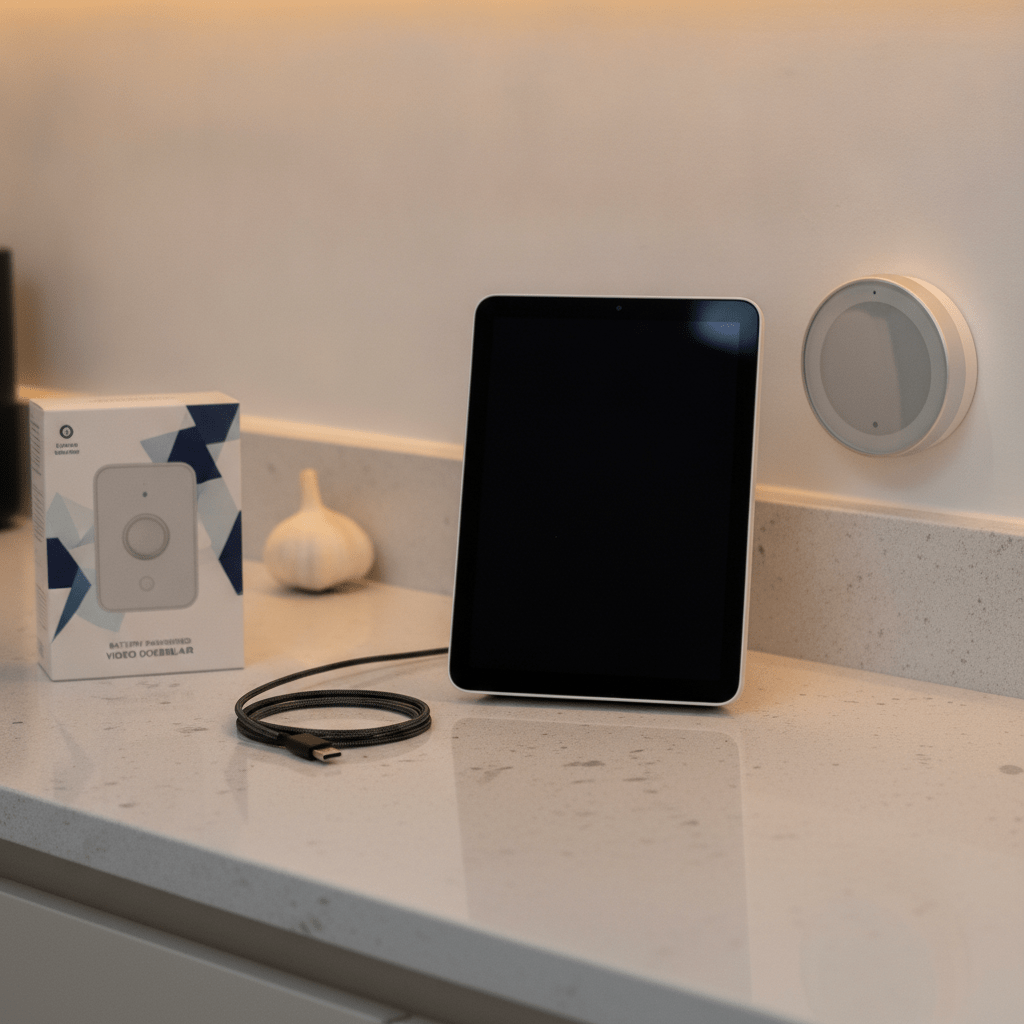
The mid-range tier adds the three things a Tier 1 setup misses: a visual display hub, whole-home heating control, and smart lighting. The anchor product is the Amazon Echo Show 8 at ~£134 on sale (£179.99 RRP, Amazon UK, August 2026) — a touchscreen that handles video calls, timers, weather, and a built-in camera for home monitoring when you’re away. Pair it with the Ring Battery Video Doorbell Plus at £149.99 (Amazon UK, August 2026), which adds two-way video chat and an improved 1536p resolution over the entry-level model.
Smart heating is where the highest upfront cost and highest long-term savings meet. A Hive Active Heating thermostat with hub costs ~£179–249 from hivehome.com (August 2026). Tado° Smart Thermostat V3+ Starter Kit runs at ~£199.99 from uk.shop.tado.com (August 2026). Both are compatible with standard UK combi boilers and include a professional installation option (£70–150 for a Gas Safe engineer) for buyers who prefer not to wire it themselves. Add four TP-Link Tapo L530E smart colour bulbs at ~£7.99–11.99 each (Tapo UK, August 2026) and a 4-pack of Tapo P110M energy-monitoring plugs at ~£30 (Amazon UK, August 2026), and a mid-range build totals roughly £400–680.
The subscription picture at Tier 2 is where buyers are most often surprised. In the worst case — Ring Protect Standard (£7.99/mo covering all Ring devices), Hive Heating Plus (£3.99/mo, adds extended warranty and repair discounts), and Alexa+ as a non-Prime member (£19.99/mo) — monthly costs add up to ~£31.97 on top of the hardware. The practical figure for a Prime member who uses Ring Protect Standard and skips the optional Hive add-on is just £7.99/mo. Hive’s core scheduling, remote control, and app features are permanently free without Heating Plus.
Pros
- Covers every major smart category — heating, security, lighting, voice control
- Smart thermostat pays back hardware cost within 1–3 years via energy savings
- Echo Show 8 screen adds real daily utility beyond voice-only devices
- Tapo P110M energy monitoring reveals exactly where standby waste is happening
Cons
- Monthly subscriptions can creep up — budget for Ring Protect as a recurring cost
- Thermostat may need professional installation in older UK homes (£70–150 extra)
- Hive and Tado have no Amazon affiliate programme — direct retailer links only
Tier 3 — Full Smart Home: What £1,500+ Gets You
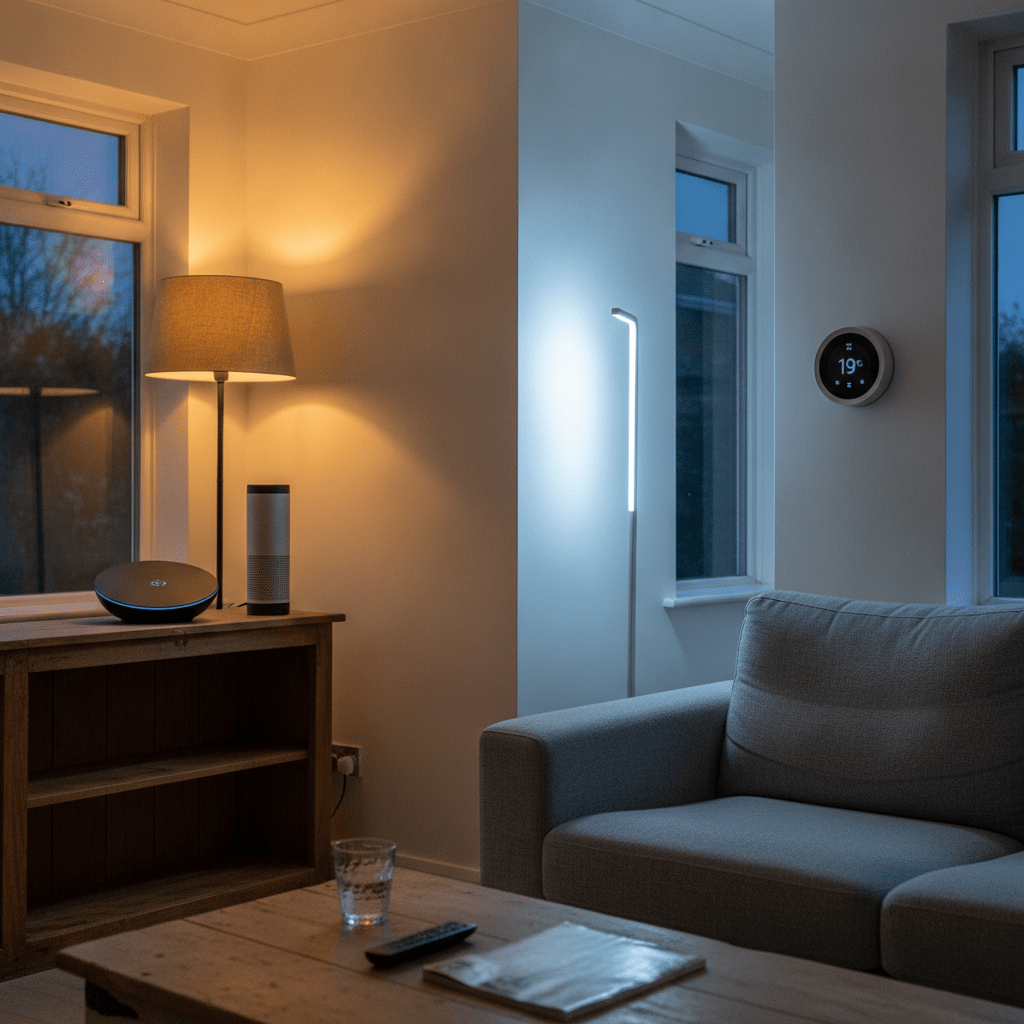
A full consumer-grade smart home — every room covered, complete security alarm, premium lighting, smart heating with individual radiator valve controls — costs £1,500–2,500 as a DIY build in a three-bedroom UK semi. Add professional installation for the thermostat wiring and any ceiling lighting work, and the figure rises to £2,500–4,000. The bespoke AV-integrated version (structural wiring, centralised hub, custom touchscreens) starts at £10,000 and is a different category entirely.
What distinguishes Tier 3 is coverage and depth, not fundamentally different technology. You’re adding an Echo device or smart speaker to every room, installing a Ring Alarm 5-piece security kit (from £150.05 at idealo.co.uk, August 2026) alongside the doorbell, fitting smart heating TRVs on each radiator (£50–80 per valve from Hive or Tado), and adding Philips Hue lighting throughout rather than just one room. The Ring Battery Video Doorbell Pro 2nd Gen at £219.99 (Amazon UK, August 2026) makes sense here, with its pre-roll video capture and 3D Motion Detection. A Philips Hue Starter Kit (Bridge + two bulbs) starts at £89–165, with each additional colour bulb at ~£25–30 (Argos / Philips Hue UK, August 2026).
Most buyers reach Tier 3 over 18–24 months of incremental building rather than a single purchase event. There’s no penalty for going slowly — devices increasingly communicate via the Matter standard, so your Tapo plugs from Year 1 work alongside your Hive thermostat from Year 2 without compatibility issues. One important note: the Google Nest Learning Thermostat is not available in the UK and Google has confirmed no new Nest thermostat models are planned for the European market. The discontinued Nest Thermostat E is available while stock lasts at specialist retailers at ~£199–219, but with no guarantee of ongoing software updates. For any new UK smart heating install, Hive and Tado are the correct options.
At this budget level, some households look past Echo, Google, and SmartThings entirely and run Home Assistant instead — free, open-source software with no subscription that supports a far wider range of Zigbee and Z-Wave hardware, at the cost of a steeper setup. Our smart home hub comparison UK 2026 weighs it against Echo, Google Nest, and SmartThings if you want more control over a Tier 3 build.
Pros
- Every major smart category covered — security, heating, lighting, multi-room audio
- Ring Alarm adds professional-grade home security for far less than ADT or Verisure
- Philips Hue delivers the best smart lighting experience — scenes, colour accuracy, reliability
- Can be built incrementally over 18–24 months — no need to spend it all at once
Cons
- £1,500+ is a significant upfront commitment — spread this over multiple years
- Subscription costs can reach £30–40/mo at full build with all optional add-ons active
- Philips Hue has no direct UK affiliate programme — linked via Amazon search
The Monthly Costs Nobody Mentions: Subscription Fees Compared
The hardware price is only part of what you’ll pay. Here is the honest breakdown of what each major smart home subscription costs, what is genuinely optional, and what is free forever — because these figures rarely appear in the same article as the device prices.
| Service | Monthly Cost | What It Adds | Required? |
|---|---|---|---|
| Alexa+ (non-Prime) | £19.99/mo | AI assistant upgrade, extended conversational skills | Free with Prime; optional otherwise (free access extended to at least 15 Sept 2026) |
| Google Home Premium (basic) | £8/mo or £80/yr | Video history, familiar face detection alerts | Optional — basic control and routines are free |
| Ring Protect Basic | £4.99/mo per device | Cloud recording of video events per camera or doorbell | Optional — live view and motion alerts are always free |
| Ring Protect Standard | £7.99/mo | All Ring devices, 180-day video history, shared users | Optional — best value if you have two or more Ring devices |
| Ring Protect Premium | £15.99/mo | Adds 24/7 professional alarm monitoring | Optional — only needed if you want monitored alarm response |
| Hive Heating Plus | £3.99/mo or £39.90/yr | Extended warranty, priority support, repair discounts | Optional — all scheduling and remote control is free without it |
| Tado Auto-Assist | ~£2.99/mo or £24.99/yr | Auto geofencing — boiler turns off when last person leaves | Optional — manual geofencing is free |
| Philips Hue (standard) | FREE | Hue Bridge (~£35–50 one-off) required for local control | Bridge is a one-off cost; no recurring fee for standard lighting |
| TP-Link Tapo | FREE forever | Scheduling, energy monitoring, remote control all included | Never required — no features are paywalled |
The key takeaway: most smart home devices work fully without any paid subscription. Ring is the main exception — if you want to review video footage after the fact, you need Ring Protect. For Echo, Tapo, Govee, and Hive’s core heating controls, the answer is permanently free. The total monthly cost for a well-configured mid-range smart home is £7.99/mo (Ring Protect Standard) for a Prime member — not the £30+ figure you’d reach if you signed up for everything optional at once.
Smart Thermostats: Costs, Savings, and Years to Break Even
A smart thermostat costs £179–250 for hardware in the UK (August 2026) and is the one smart home purchase most likely to pay for itself. According to Energy Saving Trust research, cutting your thermostat target temperature by just 1°C saves approximately £80/yr. BEAMA and Salford University research found that switching to a smart thermostat can cut annual heating bills by up to 12% — roughly £105/yr based on Ofgem’s April 2026 average annual energy bill. The broader range of studies puts real-world savings at £75–300/yr, depending on home size and how inefficient your existing heating schedule is.
In the UK, the two options are Hive and Tado. Hive Active Heating works with any standard UK combi boiler and includes a physical thermostat dial plus the Hive Hub; hardware from hivehome.com runs ~£179–249 (August 2026) with professional installation by a British Gas engineer at £70–150 extra if you prefer not to wire it yourself. Tado° Smart Thermostat V3+ Starter Kit (wired version) at ~£199.99 from uk.shop.tado.com (August 2026) also works with most UK combi boilers — Tado has an online compatibility checker before you buy. Tado’s optional Auto-Assist geofencing at ~£2.99/mo is genuinely worth it: the boiler turns off automatically when the last person leaves the house rather than requiring manual control, which is where a significant portion of the savings comes from.
At £200 hardware cost and £100/yr in savings, a smart thermostat pays for itself in two years. For a large, poorly-insulated UK home moving from manual to smart heating control, the break-even can be under 12 months at the £300/yr end of the savings range. These figures come from Energy Saving Trust and BEAMA — both official UK sources — not manufacturer estimates.
Smart Lighting and Security: Costs by Category
Smart lighting is the category where budget matters most, because the products at different price points offer genuinely different experiences — not just different aesthetics.
Budget option (£8–12/bulb): TP-Link Tapo L530E at ~£7.99–11.99 per bulb (Tapo UK / Amazon UK, August 2026) is the best-value UK smart bulb for most buyers. E27 screw fitting (standard UK), 16 million colours, no hub required, works via Alexa, Google Home, and the Tapo app. A four-bulb living room costs £32–48 — less than a single Philips Hue colour bulb.
Mid-range option (£20–25 for strips): Govee LED strips fill the gap between Tapo and Hue for accent lighting. Govee’s 5m Wi-Fi LED strip at ~£20–25 (Amazon UK, August 2026) is an easy bedroom or kitchen accent with no special fitting — plug in, peel-and-stick, connect to the Govee app. No hub. Good for colour ambience but consumer-grade build quality means it’s not the choice for hallway or main lighting.
Premium option (£25–30/bulb): Philips Hue requires a Hue Bridge (~£35–50, one-off) but delivers faster response times, more reliable local control, and significantly better build quality and colour accuracy. A Hue Starter Kit (Bridge + 2 colour bulbs) costs £89–165 depending on bulb configuration (Argos / Philips Hue UK, August 2026). A full living room — 4 colour bulbs and Bridge — costs approximately £140–200. For buyers who want the best long-term smart lighting, Hue is the right call. For buyers who want something functional without overspending, Tapo is the correct recommendation.
For smart security beyond the doorbell, the Ring Alarm 5-piece kit (base station, keypad, door/window sensor, motion detector, range extender) starts from £150.05 (idealo.co.uk, August 2026). Ring Protect Premium at £15.99/mo adds 24/7 professional monitoring — a human contacts you and the emergency services if the alarm triggers and you don’t respond. Additional Ring Indoor or Outdoor cameras cost £49.99–179.99 each (Amazon UK, August 2026) and are all covered under a single Ring Protect Standard plan at £7.99/mo — see our best Ring security cameras UK guide for a full model comparison and which to pick for different locations.
Is a Smart Home Worth It in the UK in 2026?
A smart home is worth it for most UK homeowners — provided you start with the right devices and don’t get drawn into paying for subscriptions you don’t use. The ROI case is clear for smart thermostats: £75–300/yr in savings (Energy Saving Trust, 2026) against hardware at £180–250 means you break even in one to three years. Smart plugs with energy monitoring (Tapo P110M) typically reveal £50–80/yr in standby power waste. A Ring doorbell at £79.99 one-off provides a level of home monitoring that would otherwise require a professional monitoring contract at several times the cost.
Renters get most of the same benefits. Smart plugs, smart bulbs, and a video doorbell are all renter-friendly — no permanent fixtures, no landlord permission needed in most cases. The exception is a smart thermostat if the boiler is landlord-owned; always check your tenancy agreement first. For a full beginner’s guide to setting up a smart home in the UK, including broadband speed requirements, step-by-step device setup, and UK-specific wiring advice, we have a dedicated guide.
The one caveat: smart devices depend on a stable Wi-Fi connection. If your router is old or your broadband is unreliable, add that to the pre-purchase checklist. Our broadband speed guide covers the exact Mbps minimums for smart home setups of different sizes — 25 Mbps minimum for five to ten devices, 50+ Mbps recommended for a full Tier 3 system.
Which Smart Home Budget Is Right for You?
Start with Tier 1 if:
You’re renting, on a tight budget, or want to try smart home technology before committing more. Under £75 gives you voice control and smart plugs with no ongoing costs — there’s minimal financial risk. Add the Ring doorbell as a second step once you’ve confirmed you actually use the Echo and plugs.
Move to Tier 2 if:
You own your home and your annual heating bill is above £1,000. A smart thermostat alone justifies the move to Tier 2 on energy savings alone. If you also want video security with cloud recording and smart lighting in the main living spaces, the mid-range build covers it all for £400–680 hardware.
Invest in Tier 3 if:
You own your home and plan to stay for at least three to five years. Build it incrementally — start at Tier 2, then add the Ring Alarm and room-by-room Hue lighting in Year 2. At the full £1,500–2,500 DIY cost, the thermostat and energy savings pay back a significant portion of the total spend over five years.
How to Get Started: Your First Smart Home in 3 Steps
Getting your first smart home running takes under an hour. Here is the recommended order for first-time buyers:
- Pick your hub first. Decide between Amazon Alexa (Echo Dot) and Google Assistant (Nest Mini) before buying anything else — your hub determines which devices you can control by voice. For most UK buyers, Echo Dot wins on value (~£34.99 sale vs £42–50 for Nest Mini). See our Amazon Echo vs Google Nest UK comparison for the full breakdown of which ecosystem suits which household.
- Add smart plugs next. Tapo P100 4-pack (~£12–18) connects in seconds via the Tapo app and links to Alexa or Google Home immediately. Start with four plugs — lamps, kettle, TV standby, and one appliance you routinely forget to turn off.
- Add the Ring doorbell as your third device. Charge the battery first (2–3 hours via micro-USB), mount with the included screws, and set up in the Ring app. You don’t need Ring Protect to use live view and motion alerts. Try it free for a month, then decide whether £4.99/mo for video recording is worth it for your household.
For detailed step-by-step device setup, our complete smart home setup guide covers exactly what to do and in what order, including broadband router placement for reliable whole-home coverage.
If security is a priority, discover the best home security cameras UK and factor their cost into your overall smart home budget.
Frequently Asked Questions
How much does a smart home cost in the UK?
A smart home in the UK costs anywhere from £47 (Echo Dot + 4 Tapo plugs) to £2,500+ for a full DIY whole-home system. A practical starter setup — voice assistant, smart plugs, and video doorbell — costs £127–160 one-off. A complete mid-range setup covering heating, security, and lighting costs £400–680. Bespoke professionally installed systems with structural wiring cost £10,000–250,000 and are a different category entirely from the consumer-grade smart home most buyers want.
Is a smart home worth it in the UK in 2026?
A smart home is worth it for most UK homeowners, particularly where heating costs are significant. Energy Saving Trust research shows a smart thermostat can save £75–300/yr, paying back the £180–250 hardware cost within one to three years. Smart plugs with energy monitoring typically surface £50–80/yr in standby waste. At Tier 1 with zero subscription costs for Prime members, the financial risk of getting started is minimal — a £47 investment in an Echo Dot and Tapo plugs is reversible if you decide smart home technology is not for you.
What is the monthly cost of a smart home in the UK?
The monthly cost of a UK smart home depends entirely on which subscriptions you choose. Ring Protect Basic costs £4.99/mo per device; Ring Protect Standard covers unlimited Ring devices for £7.99/mo. Alexa+ is free with Prime or £19.99/mo without. Hive’s core heating features are free; Hive Heating Plus is an optional £3.99/mo. Tado Auto-Assist is ~£2.99/mo. TP-Link Tapo has no subscription ever. For a typical Prime member with Ring Protect Standard as the only subscription, the monthly smart home cost is £7.99. In the worst case (non-Prime, all optional add-ons), it reaches ~£30–35/mo.
What is the cheapest way to start a smart home in the UK?
The cheapest UK smart home start is an Amazon Echo Dot 5th Gen (~£34.99 on sale, August 2026) plus a TP-Link Tapo P100 4-pack (~£12–18) — total approximately £47–53. This gives you Alexa voice control and four smart plugs with zero monthly fees and no hub required. With an Amazon Prime subscription, Alexa+ is included free, making the full running cost £0/mo. That is a complete working smart home for under £55 with no ongoing charges whatsoever.
Do smart homes save money on energy bills in the UK?
Smart homes do save money on UK energy bills, primarily through smart thermostats. Energy Saving Trust research shows reducing your thermostat target by 1°C saves ~£80/yr. BEAMA and Salford University found smart thermostats can cut annual heating costs by up to 12% — approximately £105/yr at Ofgem’s April 2026 average bill. Smart plugs with energy monitoring (Tapo P110M) typically identify £50–80/yr in standby power waste. Smart LED bulbs use 75–80% less energy than halogen replacements, though the per-bulb saving is modest (typically £3–8/yr per bulb at 2026 unit rates). The thermostat is where the meaningful ROI is.
How much does Ring subscription cost in the UK?
Ring subscription costs in the UK (as of August 2026): Ring Protect Basic is £4.99/mo per device — covers one camera or doorbell for cloud recording and snapshot capture. Ring Protect Standard is £7.99/mo for unlimited Ring devices with 180-day video history and shared user access. Ring Protect Premium is £15.99/mo and adds 24/7 professional alarm monitoring. No Ring subscription is required for live view, two-way talk, or motion alerts — those features are permanently free on all Ring devices.
Is Alexa Plus free with Amazon Prime in the UK?
Alexa+ is free with Amazon Prime membership in the UK. Amazon launched Alexa+ in early 2026 and confirmed Prime members receive it at no extra cost. Non-Prime members will pay £19.99/mo once the free Early Access period ends — Amazon extended free access for all users until at least 15 September 2026 (TechRadar / Amazon UK, March 2026). For heavy Echo users who are not already Prime members, the cost of Prime is likely justified by Alexa+ alone before accounting for Prime Video and delivery benefits.
Do smart thermostats actually save money on UK heating bills?
Smart thermostats do save money on UK heating bills, with official evidence from multiple sources. Energy Saving Trust estimates savings of £75–150/yr from a properly used smart thermostat. BEAMA and Salford University research found up to 12% annual heating cost reduction, equating to approximately £105/yr at the Ofgem April 2026 average UK energy bill. The key driver is eliminating unnecessary heating — scheduling, geofencing, and per-room TRV control prevent heating an empty home. At a hardware cost of £179–250, the break-even point is one to three years for most UK households.
Can I install a smart home myself in the UK?
Most consumer-grade UK smart home devices can be fully self-installed without any professional help. Amazon Echo devices plug into a socket. TP-Link Tapo and Govee smart plugs replace existing plugs with no wiring. Ring doorbells run on a rechargeable battery with no wiring required (there is also a wired option if you have an existing doorbell). Smart bulbs screw or slot into existing light fittings. Smart thermostats (Hive, Tado) are more involved — they connect to your boiler’s wiring — and many buyers opt for professional installation at £70–150 to avoid voiding the boiler warranty, though both Hive and Tado provide step-by-step DIY installation guides.
What do I actually need to start a smart home in the UK?
The minimum for a UK smart home is a broadband connection (25 Mbps minimum for five to ten smart devices), a smartphone to run device apps, and at least one smart device. You do not need a separate smart home hub — Amazon Echo (4th generation and later) has a built-in Zigbee hub that controls Zigbee-compatible lights and sensors without a separate bridge. Most Tapo and Govee devices connect directly via Wi-Fi and need no hub at all. If you want to check your broadband is up to the task before adding multiple smart devices, our guide to the best UK broadband providers covers which services offer the consistent speeds smart homes need.
Build Your Smart Home: All Products at a Glance
All prices are based on August 2026 UK retailer data — click through to check current pricing before buying.
Smart plugs are one of the most affordable entry points into smart home automation — browse our guide to the best smart plugs UK to find budget-friendly options for your smart home.

Written by the TheTechVector Team
We research UK broadband, VPN, laptop, and mobile deals so you don’t have to. All prices are checked before publication — if something’s out of date, let us know.
TheTechVector earns a commission on qualifying purchases made through links on this page. Our editorial recommendations are independent. See our affiliate disclosure for full details.
This site contains affiliate links to products. We may receive a commission for purchases made through these links.