Affiliate disclosure: TheTechVector earns a commission if you sign up via links on this page, at no extra cost to you. Our recommendations are based on independent research — we are not paid to favour any provider. Learn more about how we make money.
This BT broadband review UK breakdown looks at exactly what you get for BT’s higher prices — packages, real-world speeds, the new router, and whether the extra cost over a budget provider is worth it. BT is the UK’s biggest broadband and landline provider, with around 9 million customers, and it charges accordingly. That doesn’t automatically make it the right choice, or the wrong one — it depends on what you actually want from your connection.
Last updated: October 2026
Quick verdict: is BT broadband worth it in 2026?
BT is worth paying more for if you want a reliable connection, a decent router included as standard, and customer service trending in the right direction. It’s not worth it if lowest price is your only priority — TalkTalk or Plusnet will beat it on cost every time. BT’s entry full fibre plan, Full Fibre 300, starts from ~£30.99/mo (BT’s own site, 20 October 2026; BT no longer sells Full Fibre 150 – check current BT broadband deals for the latest offers).
Update, 21 October 2026: BT Group acquired TalkTalk’s consumer broadband business (TalkTalk Telecommunications and PlatformX) out of administration on 5 October 2026, in a deal Reuters reported at £400 million. BT says the aim is continuity of service for TalkTalk’s roughly 2.5 million customers. We’ll update this guide as BT sets out what it means for TalkTalk’s plans and prices.
What broadband packages does BT offer in 2026?
BT sells six main broadband packages, split between its older FTTC (part-copper) line and its newer Full Fibre (FTTP) network. If you’re unclear on the difference, our guide to what full fibre (FTTP) actually means explains it in plain English — Full Fibre runs fibre optic cable all the way into your home, while FTTC still uses a copper phone line for the final stretch, capping how fast and consistent your speeds can be.
All BT contracts run 24 months, and BT’s own site shows no activation fee on its current plans (£0, 20 October 2026). Here’s the current range, as listed on BT’s own site on 20 October 2026:
| Package | Network | Avg speed | From (to Mar 2027) | Reward card |
|---|---|---|---|---|
| Fibre Essential | FTTC | ~36Mbps | ~£28.99/mo | none listed |
| Fibre 2 | FTTC | ~67Mbps | ~£30.99/mo | none listed |
| Full Fibre 300 | FTTP | ~300Mbps | ~£30.99/mo | none listed |
| Full Fibre 500 | FTTP | ~500Mbps | ~£33.99/mo | none listed |
| Full Fibre 900 | FTTP | ~900Mbps | ~£35.99/mo | none listed |
Prices from BT’s own site, 20 October 2026 (BT also sells a Fibre 1 plan at ~£28.99/mo that isn’t in the table). BT no longer lists Full Fibre 150, so Full Fibre 300 is now the entry full fibre plan. BT’s headline price only applies until the next March rise — see the price-rises section below. Always confirm current pricing via the link before signing up.
There’s a useful catch here: Fibre Essential, BT’s slowest package at roughly 36Mbps, opens only about £2/mo below Full Fibre 300, which is many times faster. Unless your address can’t get Full Fibre, there’s no reason to end up on Fibre Essential by accident — check BT’s latest full fibre pricing before you commit.
BT also runs Home Essentials social tariffs for customers on qualifying benefits, on a 12-month plan with no early exit fees. Ofcom’s October 2026 list shows Home Essentials No Income at £16.50/mo (36Mbps, Universal Credit households with zero income), Home Essentials Unlimited at £22/mo (36Mbps) and £25/mo (67Mbps). Existing BT, EE and Plusnet customers who qualify can switch over for no extra charge, but you need to ask BT, since these plans aren’t always advertised alongside the standard range.
BT broadband speeds: what can you realistically expect?
BT’s Full Fibre tiers come with a Stay Fast Guarantee — a minimum speed floor for each package, not just an “up to” headline figure. Full Fibre 300 guarantees 150Mbps, Full Fibre 500 guarantees 250Mbps, and Full Fibre 900 guarantees 700Mbps. If your line drops below that minimum and BT can’t fix it, you’re entitled to compensation or can leave the contract penalty-free — a real protection most FTTC-only providers can’t offer.
On the FTTC side, Fibre Essential and Fibre 2 don’t carry the same guaranteed-minimum framing — BT doesn’t publish a Stay Fast floor for these tiers, and real-world speeds depend on how far your home sits from the street cabinet. On a long copper run, the advertised “up to” figure can be optimistic.
Upload speeds matter more than most people realise, for video calls and cloud backups especially, and scale roughly with the download tier — Full Fibre 900 offers genuinely symmetric-feeling upload performance, where older FTTC products have always been weak. If you’re not sure what speed tier suits your household, our guide on how much broadband speed you actually need breaks it down by household size and use case, rather than pushing the fastest, priciest option.
BT’s Smart Hub 3 router: what’s changed, and is it any good?
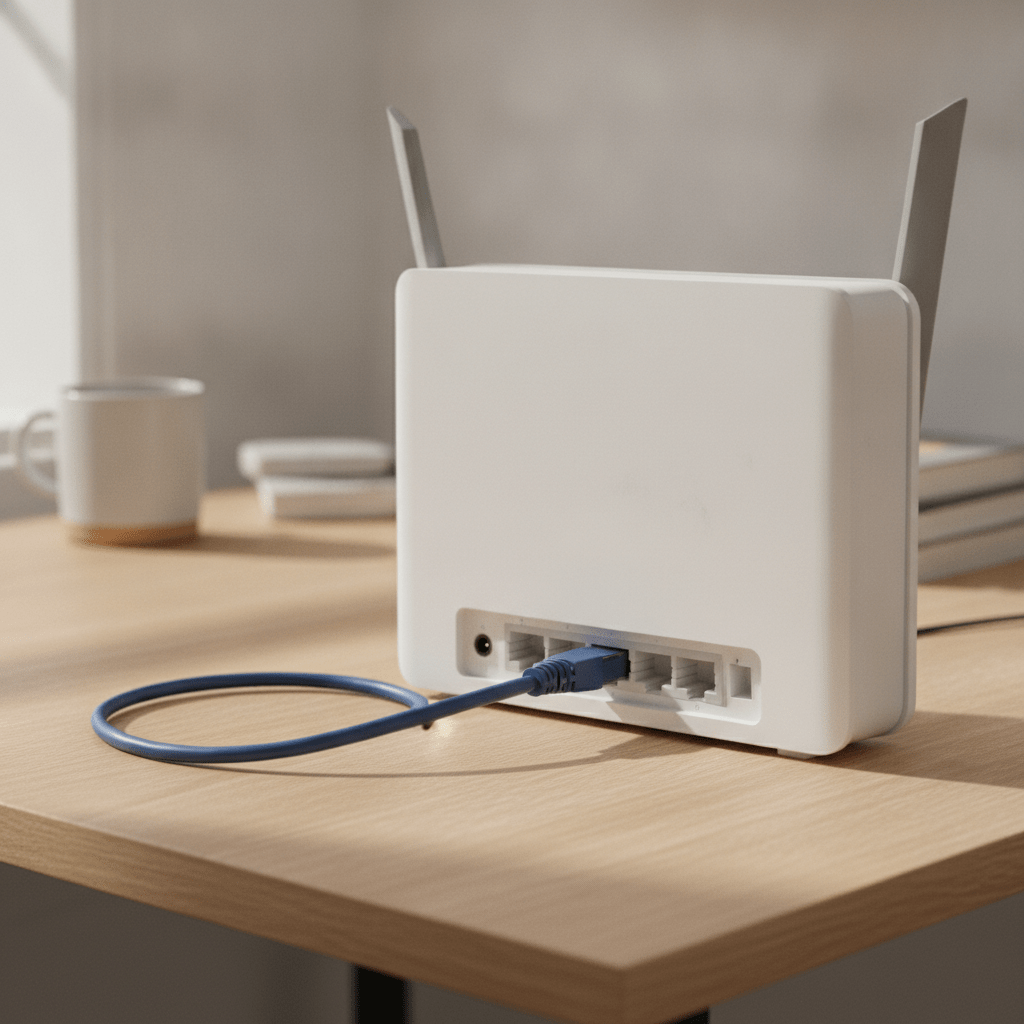
BT’s Smart Hub 3 replaced the long-serving Smart Hub 2 as the standard router across virtually the entire BT range by around April to May 2026, and it’s a genuine upgrade rather than a cosmetic refresh. The headline change is Wi-Fi 6 (802.11ax), up from the Smart Hub 2’s Wi-Fi 5 — better performance when several devices compete for bandwidth at once, which matters more now than when the Smart Hub 2 launched back in 2018. It also gets 7 antennas, four Gigabit Ethernet ports, physical on/off light control, and a Smart Scan feature that checks for interference from neighbouring networks.
Here’s the honest gap: the Smart Hub 3 is Wi-Fi 6, not Wi-Fi 7. Sister brand EE already ships Wi-Fi 7 as standard on its Full Fibre range via the Smart Hub 7 Plus — see our EE broadband review for detail. Wi-Fi 6 is still genuinely good and more than enough for most UK homes, but BT isn’t shipping the latest wireless standard yet.
BT also sells two optional add-ons. Complete Wi-Fi Plus (~£10/mo extra) adds a Wi-Fi 6 extender disc, backed by a £100 money-back guarantee if BT can’t get a strong signal into every room. Hybrid Connect (~£10/mo extra) is a 4G backup router on the EE network — if your main line drops, it switches over automatically and back again once fixed. Neither is essential for a flat or small terrace, but both suit larger homes or anyone who can’t afford downtime.
Smart Hub 3 — Pros
- Wi-Fi 6, a real step up from the old Smart Hub 2
- 7 antennas and 4 Gigabit Ethernet ports as standard
- Included free on virtually every BT package
Smart Hub 3 — Cons
- Wi-Fi 6, not Wi-Fi 7 — EE already has the newer standard
- Complete Wi-Fi Plus and Hybrid Connect both cost extra
Not sure whether your current router is holding you back, or whether you even need to think about this when switching? Our guide on whether you need to upgrade your router for full fibre walks through when a bundled ISP router is genuinely fine and when it’s worth adding your own mesh system.
BT Halo explained: is the premium tier worth paying for?
BT Halo is BT’s premium broadband tier, and it comes in two levels — Halo 3 and Halo 3+ — that add service guarantees and support on top of a standard Full Fibre package rather than just faster speeds. BT doesn’t publish a clear standalone price for Halo, so check current Halo pricing via the link below rather than trusting a number quoted elsewhere.
Halo 3 includes the “Keep Connected Promise” — BT sends a Mini Hub with mobile backup immediately if there’s a fault or you’re moving house, so you’re not left offline while an engineer is booked. It also includes a “Price Promise,” meaning your bill won’t jump at contract end beyond what a new customer pays for the same package, and “Home Tech Experts” — in-home visits in 2-hour slots, seven days a week, for anything from Wi-Fi troubleshooting to setting up a new device.
Halo 3+ builds on that with a Smart Hub that includes parental Wi-Fi and screen-time controls, Hybrid Connect built in from day one rather than added later, and a “Full Fibre Promise” — a free upgrade to full fibre once it’s available at your address. Hold a BT Mobile SIM on the same account and Halo customers also get a mobile data boost, broadband backup on their phone, and a standing £5/mo discount on the mobile plan.
One thing to know before regrading: moving an existing BT contract to Halo starts a fresh 24-month term. Halo makes the most sense for households that genuinely can’t tolerate downtime — people working from home, families with kids doing schoolwork online, or anyone burned before by a slow repair process. If you rarely have problems, it’s an add-on you can skip.
Why Is BT Broadband So Expensive? Price Rises Explained
Short answer: BT prices itself as a premium provider, and the advertised price rises every year of your contract. Customers joining from 31 July 2025 get a fixed £4/mo rise each 31 March, which BT’s own site shows taking Full Fibre 300 from ~£30.99/mo to ~£34.99/mo in March 2027. On top of that, BT’s value-for-money scores below Plusnet and EE, and its Fibre Essential plan costs only about £2/mo less than much faster Full Fibre 300. The detail is below.
BT’s headline price only holds for part of your contract, and the stepped structure matters more than the “from” figure on any deals page. Customers joining from 31 July 2025 get a fixed £4/mo rise every 31 March through the contract. Those who joined between 10 April 2024 and 30 July 2025 get a fixed £3/mo annual rise instead. Anyone still on an older CPI-linked contract from before 10 April 2024 is being moved onto the fixed pounds-and-pence model from 1 March 2026 — a migration that technically puts those customers out of contract and free to switch or renegotiate (source: uswitch.com, updated 6 February 2026, checked 1 September 2026).
Here’s what that looks like in practice on Full Fibre 300, BT’s entry full fibre package:
| Contract period | Monthly price |
|---|---|
| Opening price (to March 2027) | ~£30.99/mo |
| From March 2027 | ~£34.99/mo |
| Each following March | a further fixed rise (+£4/mo for customers who joined from 31 July 2025) |
Figures from BT’s own site (20 October 2026). The advertised “from” price only holds until the first March rise.
That’s a £4/mo rise, around 13%, from the advertised price in March 2027, with further fixed rises each March after that. It’s not unique to BT; most UK providers now use a similar stepped or fixed annual rise structure since Ofcom banned the old RPI/CPI-linked model for new contracts. Do the maths before comparing BT’s opening price against a competitor’s — the headline figure alone doesn’t show what you’ll pay across the whole term.
If you’re already partway through a BT contract and want out before the price rises hit, or you’re just tired of the creeping cost, our guide on how to switch broadband providers covers your options, including when you can leave penalty-free.
BT customer service: the honest picture
BT’s Ofcom complaint figures have been trending in the right direction for a full year, and that’s the most reliable signal available since it’s regulator data rather than a provider-run survey. Ofcom’s quarterly broadband complaints data (per 100,000 customers) shows BT falling from 9 in Q2 2025, to 9 in Q3, 8 in Q4, and 7 in Q1 2026 — against an industry average of 6 in the same quarter (source: ispreview.co.uk, citing Ofcom’s Q1 2026 report, published 23 July 2026, checked 1 September 2026). BT now sits just one point above average — a genuinely improving story rather than a glowing one, while TalkTalk remains the clear outlier at the bottom with 10 complaints per 100,000.
| Provider | Q1 2026 complaints (per 100k) |
|---|---|
| Plusnet | 4 |
| Sky Broadband | 5 |
| EE | 6 |
| Virgin Media | 6 |
| BT | 7 |
| Vodafone | 8 |
| TalkTalk | 10 |
Ofcom Q1 2026 quarterly complaints data, per ispreview.co.uk (published 23 July 2026, checked 1 September 2026). Industry average was 6 per 100,000 — an all-time low overall, down from a 2011 peak of 40.
BT’s own reputation with actual customers is generally solid, if unspectacular. On Trustpilot, BT holds 4.1 out of 5 from 39,643 reviews (checked 1 September 2026) — strong for a telecoms provider at this scale. Uswitch’s 2026 customer survey of 3,622 BT customers rated it 4.14/5 overall, with speed (4.16/5) and reliability (4.19/5) “Excellent,” but customer service (3.84/5) and value for money (3.85/5) both “Average” — BT scores lower on value for money than sister brands Plusnet and EE (source: uswitch.com, updated 6 February 2026).
The recurring complaint theme, based on first-person reporting, is phone-support wait times — sometimes up to an hour in busy periods. The website and app-based self-service route tends to be faster than calling, and once through, agents are generally described as competent and able to actually resolve things.
BT broadband vs the rest of the market
BT sits in the upper-middle of the UK broadband market on price — cheaper than Virgin Media’s cable network on most entry tiers, broadly similar to Sky, and noticeably more expensive than budget-first providers like TalkTalk or its own sister brand Plusnet. What you’re paying for is the Openreach FTTP network (nearly three-quarters of UK premises and expanding), the Stay Fast Guarantee, BT’s improving complaint trend, and — if you want it — the Halo service promises. If pure lowest price is your only priority, BT isn’t built for that.
BT and EE share the same parent company and much of the same Openreach network, but EE ships newer Wi-Fi 7 router hardware as standard, worth knowing if router specs matter to you. Sky runs on a mix of Openreach and CityFibre and tends to compete closely with BT on price and TV bundle content. Virgin Media uses its own cable and Nexfibre network rather than Openreach and can undercut BT on raw top-end speed where available, though its customer service record has historically been more mixed. See our full BT vs Sky comparison if you’re deciding between those two, or compare all major UK broadband providers for the full market picture.
One thing that makes switching easier either way: One Touch Switch is fully live across the industry now, so if you’re moving to BT you don’t need to separately contact and cancel your old provider — BT handles the handover for you.

BT broadband review verdict: who should choose BT?
BT is worth the extra money if reliability and support matter more to you than shaving a few pounds off the bill. You’re getting an improving customer service track record, a solid Wi-Fi 6 router as standard, a real Stay Fast speed guarantee on Full Fibre, and — if you need it — a thoughtfully built premium tier in Halo. What you’re not getting is the cheapest deal on the market, and BT’s own customers rate it lower on value for money than sister brands Plusnet and EE.
BT overall — Pros
- Improving Ofcom complaint trend (9 → 9 → 8 → 7 over the last four quarters)
- Stay Fast Guarantee on Full Fibre tiers
- Smart Hub 3 (Wi-Fi 6) included free as standard
- Huge Openreach FTTP coverage and 5 million+ public Wi-Fi hotspots included
- Halo tier gives genuine downtime protection for households that need it
BT overall — Cons
- Not the cheapest — value-for-money scores below Plusnet and EE
- Steep stepped price rises through the contract (+£4/mo each March on full fibre)
- Smart Hub 3 is Wi-Fi 6, not Wi-Fi 7 like EE’s hardware
- Fibre Essential costs only about £2/mo less than much faster Full Fibre 300
Best for reliability-over-price households
If you work from home, run smart home devices around the clock, or can’t afford an outage, BT’s improving complaint trend and Stay Fast Guarantee make it a sensible default.
Best for BT Sport and TV bundle fans
If TNT Sports (formerly BT Sport) and exclusive Champions League and Europa League coverage matter to you, bundling broadband and TV through BT keeps everything on one bill and one connection — no satellite dish required.
Best for existing BT Mobile customers
If you’re already on BT Mobile, Halo’s mobile data boost and standing £5/mo discount make the combination better value than treating broadband and mobile as two separate purchases.
Look elsewhere if price is your only priority
If the monthly bill is the only thing that matters, BT isn’t built for that comparison — TalkTalk or sister brand Plusnet will both undercut it consistently.
How to switch to BT in three steps
- Check availability and current pricing for your address using the link below — Full Fibre coverage varies by area even though it now reaches nearly three-quarters of UK premises.
- Pick your package based on real household need rather than the fastest headline number — our broadband speed guide can help if you’re unsure.
- Sign up online — thanks to One Touch Switch, BT handles cancelling your existing provider for you, so there’s no separate call to make.
If you are leaving BT before the end of your contract, see how BT’s early termination fee is calculated and how it compares with EE, Sky, Vodafone and TalkTalk.
Frequently asked questions
Why is BT broadband so expensive?
BT positions itself as a premium provider, and its prices rise every year of the contract. Customers who joined from 31 July 2025 face a fixed £4/mo rise each 31 March, and those who joined between 10 April 2024 and 30 July 2025 get a £3/mo annual rise. On Full Fibre 300 BT’s own site shows ~£30.99/mo rising to ~£34.99/mo in March 2027 (20 October 2026). If the cost is the problem, compare Plusnet or EE, or ask BT about its Home Essentials social tariffs if you qualify.
Is BT broadband any good in 2026?
BT broadband is genuinely good on the fundamentals — Uswitch’s 2026 customer survey rated speed and reliability “Excellent” (4.16/5 and 4.19/5), and Ofcom’s Q1 2026 complaints data shows BT trending down each quarter to just one point above the industry average. It scores lower on value for money than sister brands Plusnet and EE, so it’s a strong pick for reliability but not the cheapest option.
How much does BT broadband cost per month?
BT no longer sells Full Fibre 150. Its entry full fibre plan, Full Fibre 300, starts from ~£30.99/mo (BT’s own site, 20 October 2026), rising to ~£34.99/mo in March 2027. Fibre Essential (~£28.99/mo) and Fibre 2 (FTTC, ~£30.99/mo) are cheaper or similar but much slower. Always check current pricing via BT’s link, since these figures change.
Does BT put its broadband prices up every year?
Yes. Customers who joined from 31 July 2025 face a fixed £4/mo rise every 31 March during their contract. Those who joined between 10 April 2024 and 30 July 2025 get a £3/mo annual rise. Older CPI-linked contracts are being migrated to this fixed pounds-and-pence model from 1 March 2026, which technically puts those customers out of contract and free to switch.
What router does BT give you?
BT includes the Smart Hub 3 free with virtually every package as of 2026, replacing the older Smart Hub 2. It supports Wi-Fi 6, has 7 antennas and four Gigabit Ethernet ports. It’s a genuine upgrade over the old hardware, though it’s Wi-Fi 6 rather than the Wi-Fi 7 that sister brand EE now ships as standard.
Is BT Full Fibre available at my address?
BT’s Full Fibre (FTTP) network runs on Openreach infrastructure, which now reaches nearly three-quarters of UK premises and is still expanding, while BT’s FTTC network covers roughly 98% of the country. Availability varies by street, so the only reliable way to check is entering your postcode on BT’s own site before you sign up.
Is BT broadband better than Sky or Virgin Media?
BT and Sky are closely matched on price and network, with Sky running on a mix of Openreach and CityFibre. Virgin Media can offer faster top-end speeds on its own cable network in areas where it’s available, but its customer service record has historically been more mixed than BT’s improving trend. For the full breakdown, see our BT vs Sky comparison.
What is BT Halo and is it worth paying for?
BT Halo is a premium tier that adds service guarantees rather than faster speeds — a 4G backup Mini Hub sent immediately if there’s a fault, a Price Promise capping renewal costs, and Home Tech Experts for in-home visits. It’s worth it for households that can’t tolerate downtime; BT doesn’t publish a standalone price, so check current Halo pricing via the link before deciding.
Do I need a landline to get BT broadband?
No — BT’s Full Fibre packages don’t require an active landline the way older copper-based broadband did, since the connection runs over fibre rather than the phone line. A phone socket or line rental may still show on your bill depending on the package, so check the details for your chosen tier first.
How do I cancel BT broadband without paying a penalty?
You can usually leave a BT contract penalty-free at the end of the minimum term (typically 24 months), or earlier if BT breaches its Stay Fast Guarantee and can’t fix it, or if you’re on an older CPI-linked contract being migrated to the new pricing model, which puts you out of contract. Our guide on how to switch broadband providers covers the full process.
Does BT offer a cheaper broadband deal for people on benefits?
Yes. BT’s Home Essentials range offers social tariffs for customers on qualifying benefits: £16.50/mo for Universal Credit households with no income (36Mbps), £22/mo for 36Mbps and £25/mo for 67Mbps (Ofcom, October 2026). They run on a 12-month plan with no early exit fees, unlike BT’s standard packages, and BT says the monthly price of the Home Essentials package does not rise each March.
Ready to switch to BT broadband?
Check BT’s current Full Fibre pricing and offers, compare against Sky, or see how BT stacks up against every major UK provider before you decide.

Written by the TheTechVector Team
We research UK broadband, VPN, laptop, and mobile deals so you don’t have to. All prices are checked before publication — if something’s out of date, let us know.
Prices, speeds, and package details in this BT broadband review are checked as of 20 October 2026 and may change — always confirm current figures via the links above before signing up. TheTechVector may earn a commission from qualifying purchases made through links on this page, which helps fund our independent research.
This site contains affiliate links to products. We may receive a commission for purchases made through these links.